
Wandering Into Ma 間

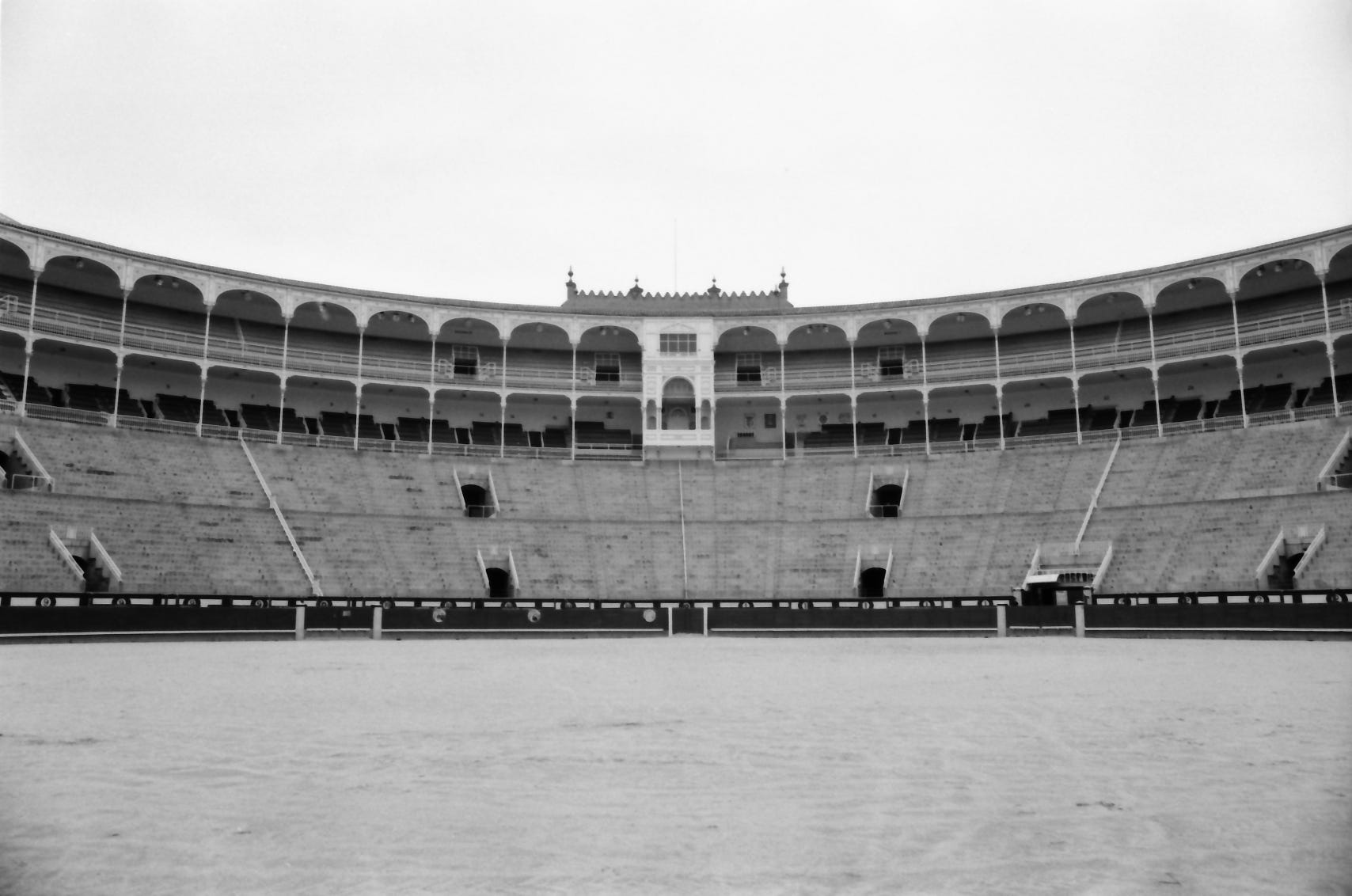
From the warm subway station, bustling with morning commuters, I emerged into an oddly quiet Plaza de Toros. In front of me, Madrid’s commanding Las Ventas bullring stood, the unusually gloomy sky rolling overhead. It was the off-season, and I was prepared for the typical chilly February weather, but not the rain. Regardless, this was my scheduled ticket time, so I pulled up the hood on my jacket and carried on.
Two young children were following their father’s pointer finger around the arena as he attempted to keep their interest. Occasionally he would bend down to adjust their jackets, protecting them against the misty air. It didn’t take long for the children’s excitement for this experience to dwindle. The father’s shoulders dropped, unable to capture their youthful attention any longer. He placed his hands gently on their backs ushered them inside.
I pulled out my camera, making sure the wide lens was on, and adjusted my shutter speed and aperture for the dreary day. Eye to the finder, I checked my exposure and pulled focus to infinity. I lined up the shot, and clicked the shutter button. As if on cue of that first click, the drizzle faded away and I looked up just in time to see the father and the children disappear into the building. This was the moment I found myself entirely alone in the middle of one of the most famous bullrings in the world.
I was immediately able to recognize how special this moment was. No other tourists, no docents, no security guard, no fans, nobody - just me. I walked to the center of the ring and stood there in the stillness. I had never been to a bullring in my entire life. I simply didn’t have the stomach to watch an actual fight. But here I stood, ready to explore this world without interruption. I slowly pivoted myself around on the muddy earthen floor, taking in the amphitheater in all its desolate beauty.
Guided by the deep-red wooden barrier that ran the perimeter of the ring, separating the action from the fans, I focused my camera on the unique elements surrounding me. The covered grandstands for the elite spectators perched high above the crowds below, their roofs lined in ornamental trim. The Royal box, breaking the panorama with its opulence, jutting out to oversee the festivities below. The neatly stenciled numbers marking the ticket holder’s spot on the concrete general admission seats.
A large, simple clock looming overhead signaled I had spent a good 30 minutes in the arena alone before other visitors began to arrive. The solitary time I had inside this storied sanctuary had come to an end, but I would carry that moment with me forever.
In the months that followed, I kept thinking back to that stillness. The air had seemed to hold its breath, and time felt briefly suspended. I started noticing echoes of that same pause elsewhere in my travels, especially in moments of chaos or when my mind refused to quiet. There was a rhythm to it, a pulse between movement and rest, noise and silence, that I could not name at first.
Then I came across the Japanese concept of Ma (間), simply defined as a profound stillness in the present: the motionless, conscious interval that allows us to release the past and open to what comes next. It is the pause we need, however big or small, to reorganize our minds and reenergize our souls, the space where creativity and wonder are quietly reborn.
Ma stood next to me on the rooftop of the Estrela Basilica on a beautiful, sunny afternoon in Lisbon. It followed a physically and emotionally draining morning. I had gotten lost in the maze of streets originally intended to slow down would-be invaders, now left to confuse tourists. My frustration had soured my day, until I found myself here, overlooking the red tiled rooftops that stretched down to the Tagus River, the sun shining in the clear blue sky and warming my face. The clang of trollies below floated through the muted traffic, reminding me how lucky I was to have the experience of traveling to such beautiful places.
I discovered Ma once more in a mid-week, off-season visit to the Jeronimus Bosch Art Center where I stood in front of the full-sized replica of “The Garden of Earthly Delights”, my favorite painting in the world. I closed the outer panels and stood back, letting the sobering gray scene center me. With no other onlookers around, my imagination began to play. I became a 16th Century steward of the painting. I was bestowed important duty of opening its wings to let the color pour out and into the eyes of the first-time viewers. I would hear their gasps of awe from behind me, before turning to delight in their bewildered faces gawking at this new and wild vision of the past, present, and future. In the quietness, I was afforded all the time I craved in communion with the extraordinary vision of Bosch at a time when my own creativity had grown silent.
Ma can also be shared with another person, creating a natural and beautiful understanding within the experience. The first full day in Paris with my best friend, Alice, coincided with White Night (Nuit Blanche). We had been fighting jet lag all day but jumped at the chance to roam the Louvre in the late-night hours. Hardly a tourist in sight and no locals to be found, we wandered through vast, echoing rooms where the relics of ancient civilizations seemed to whisper to us. We stood face-to-face with Mona without a crowd pressing in, then ran laughing through long empty hallways like characters in a Godard film.
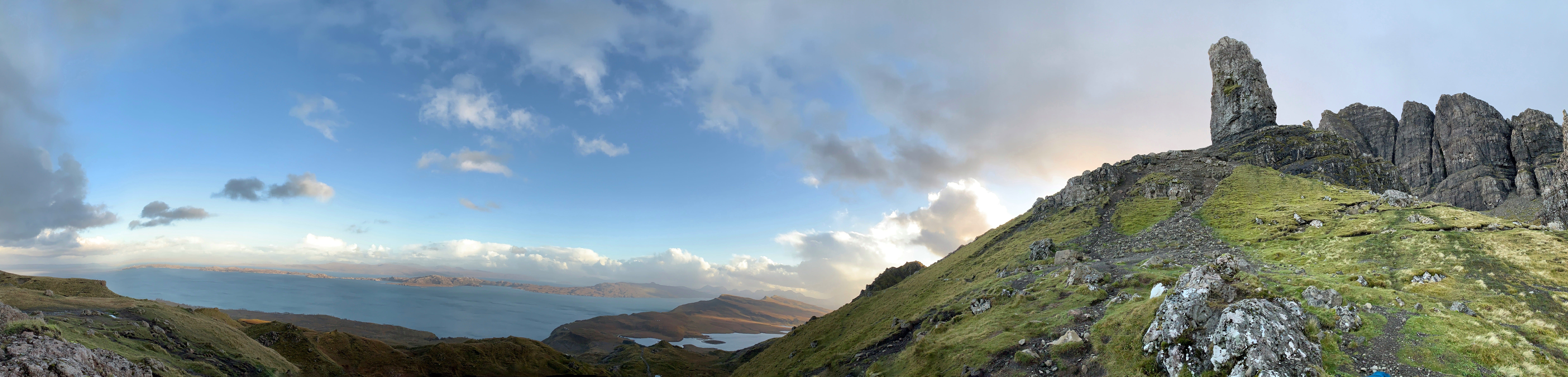
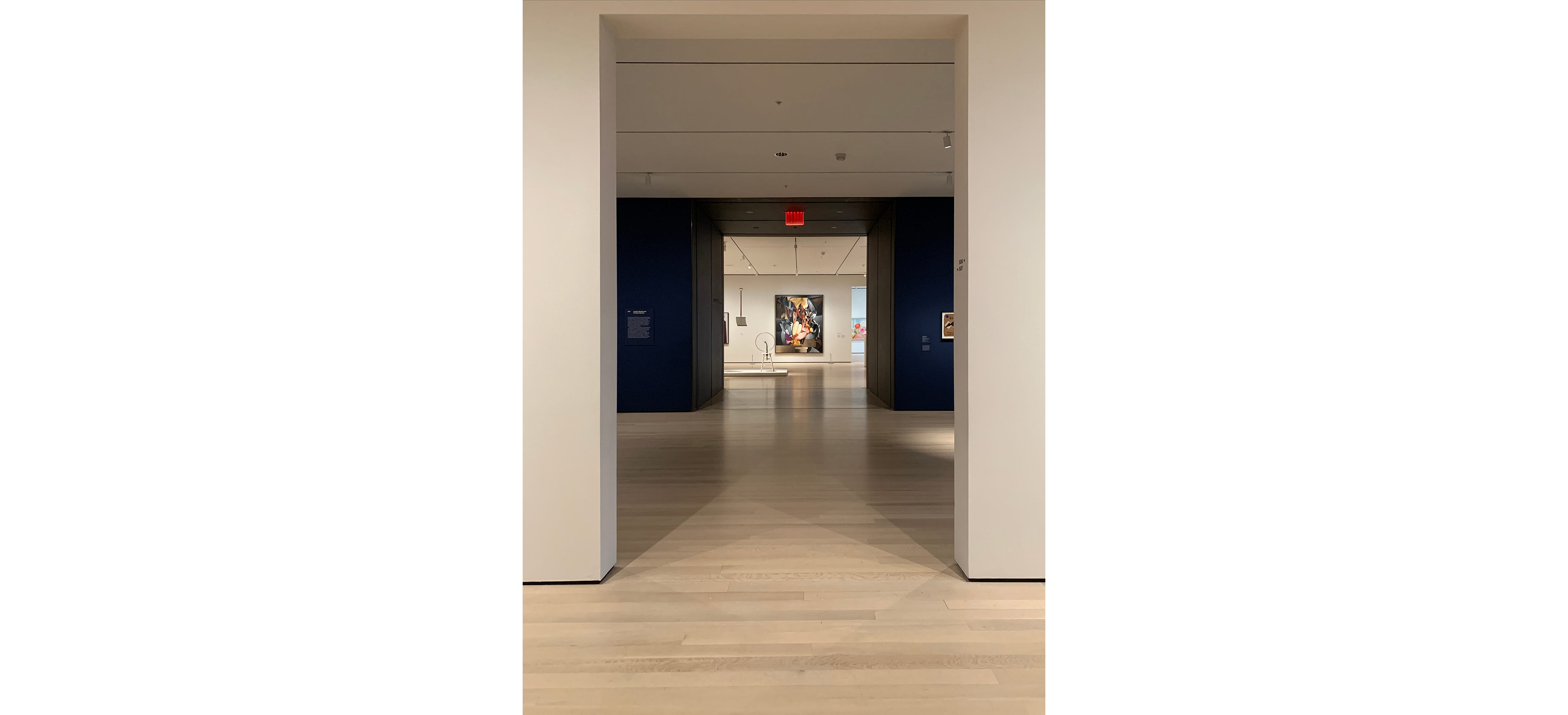
Kenny and I found it on a blustery Scottish afternoon climbing to the Old Man of Storr, just before the touristy crowds returned to the Isle of Skye post-lockdown. In our isolation we felt like early pioneers as we ascended the usually overly-beaten path, now nearly reclaimed by nature in the absence of tour buses. Norman and I experienced the surreal emptiness of Times Square after an autumn storm chased the tourists inside for the evening, leaving just the two of us puddle-jumping in the electric apocalyptic scene. Bryce and I roamed the hallowed halls of the Museum of Modern Art the day it reopened after lockdown. Gallery after gallery were deserted, allowing us to pretend we were royalty, complete with an official photographer to document the occasion. Each of those moments, brief as they were, carried the same pulse: the quiet, unspoken recognition between two people that the world had fallen still.
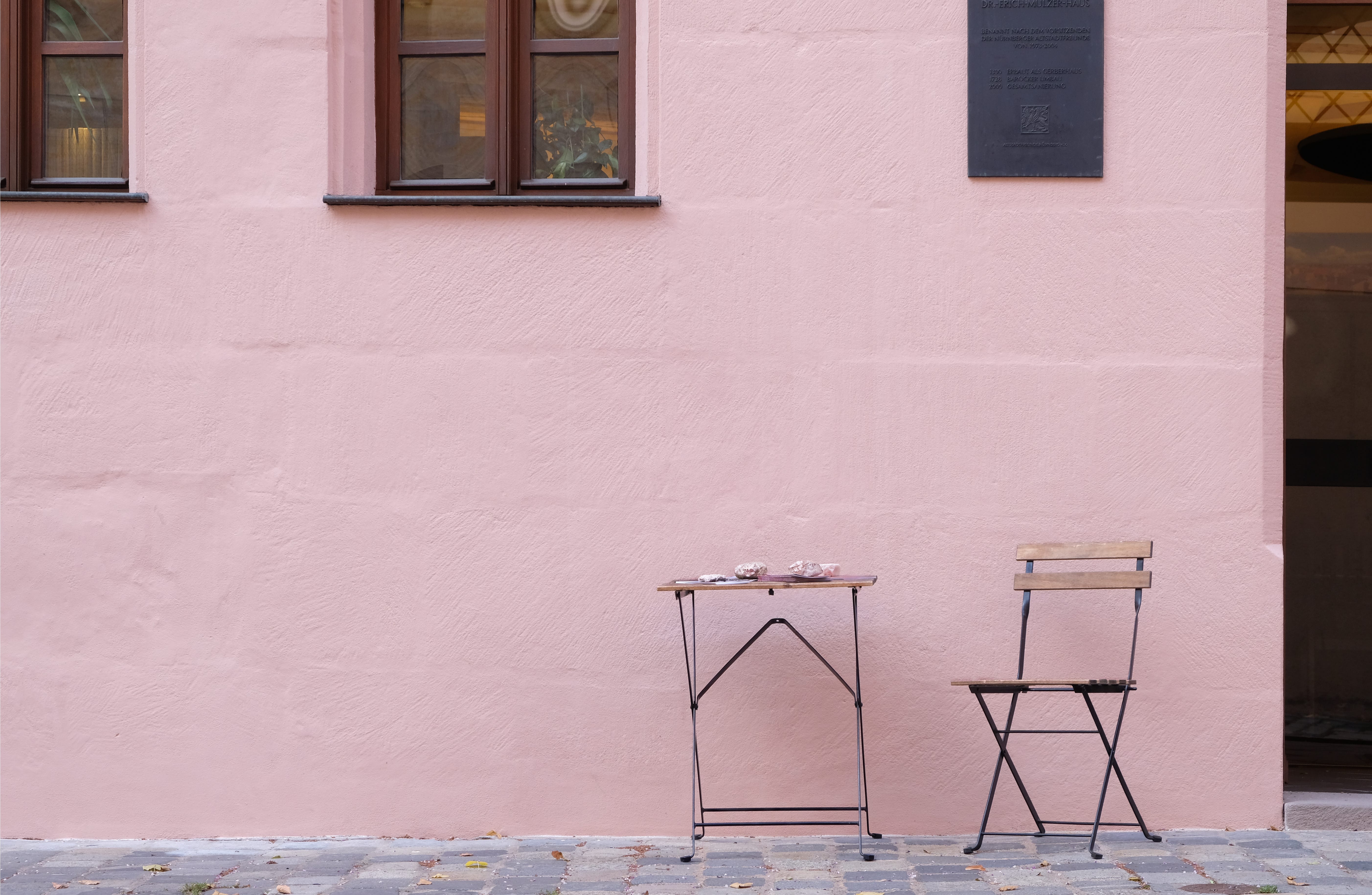
Those examples of unique, generally unplanned surprises, taught me the importance of seeking out moments of Ma wherever and whenever I could. I found them in the off-the -beaten-path places often ignored by tourists: small, quiet churches and chapels tucked away in the side streets, offering respite from the chaos outside; treasure hunting in the hushed depths of a museum where forgotten artists wait to be rediscovered; walking through sleepy neighborhoods in the evening, soft amber streetlights guiding me along the cobblestone streets. Camera in hand, I try to capture Ma through my lens - not just the scene itself, but the quiet between light and shadow.
There are, of course, moments in solo travels that can feel isolating - an afternoon coffee in a busy café, a long train ride, or a table for one at dinner. These are the moments when loneliness can seep in, altering how you show up in these spaces. So I began centering Ma instead, transforming loneliness into presence, introspection, and creativity. I enjoy my coffee listening to the melodies of multi-lingual chatter that surround me. I spend the long train rides writing. I dine with Kerouac, Vonnegut, and Brennen.
I am learning to integrate Ma into my everyday life now, and recognize it in even the smallest of places - the pause between stanzas in a poem, the quieting of crickets before a summer storm, the moment after my first sip of morning coffee, the smile shared between me and a friend, and in the deep, satisfying breath I take just before I fall asleep. It’s in those pockets of silence, just like the empty bullring or the quiet museum gallery, where I find myself suspended, excited by the infinite possibilities.
.